The Founding Story
Tesla Motors was founded in 2003 by engineers Martin Eberhard and Marc Tarpenning, who wanted to prove that electric vehicles could be better than gasoline cars. The company was named after inventor Nikola Tesla. Elon Musk joined in 2004, leading the Series A funding round with a large personal investment and becoming chairman, later taking over as CEO.
Tesla's goal was audacious: to accelerate the world's transition to sustainable energy by building compelling electric cars. The strategy was to start with a high-end, low-volume sports car and use the profits to fund progressively more affordable mass-market models.
Early Growth and Pivotal Moments
The 2008 Roadster, based on a Lotus chassis, was the first highway-legal electric car to use lithium-ion battery cells and travel more than 200 miles on a charge. It proved electric cars could be fast and desirable, not just glorified golf carts. But the company nearly went bankrupt during the 2008 financial crisis, saved by a last-minute funding round.
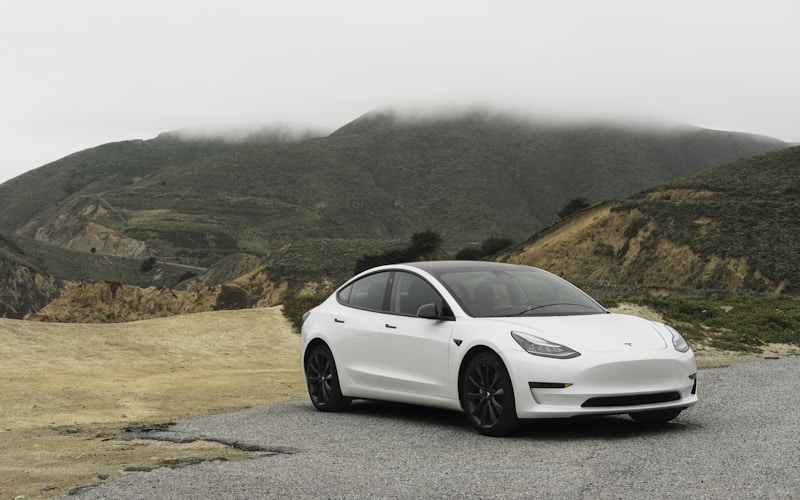
Tesla went public in 2010, the first American automaker to IPO since Ford in 1956. The 2012 Model S luxury sedan earned rave reviews and awards, establishing Tesla as a serious carmaker. The Model 3, launched in 2017, was the affordable mass-market car the company had always aimed for and became a best-seller.
Revenue and Business Milestones
Tesla struggled for years with "production hell" as it scaled manufacturing, but eventually achieved consistent profitability. Revenue grew from around $2 billion in 2013 to over $24 billion by 2019 and beyond $80 billion in the mid-2020s. The company built massive "Gigafactories" in Nevada, Shanghai, Berlin, and Texas.
Tesla's stock soared, at one point making it the most valuable automaker in the world by far, worth more than several traditional carmakers combined despite producing a fraction of their volume. Musk became the world's richest person as a result.
Current Scale and Impact
Beyond cars, Tesla built a business in solar panels, home battery storage (Powerwall), and grid-scale energy storage. Its Supercharger network became a competitive advantage, and its work on autonomous driving software kept it at the center of the self-driving debate.
What Makes Tesla Stand Out
Tesla forced the entire global auto industry to pivot toward electric vehicles, achieving in two decades what incumbents had resisted for a century. Its vertical integration, direct-to-consumer sales model, and software-first approach to cars, combined with Musk's relentless ambition, made it the defining company of the EV era.


